Don’t complicate it.
Plant what you like. Plant what you’ll eat.
It sounds obvious, but it took me years to figure that out.
I’ve planted plenty of vegetables simply because they looked beautiful in seed catalogs or because someone on the internet convinced me I needed to grow them. Rainbow Swiss chard? Gorgeous. Kohlrabi? Interesting.
Did we actually eat them?
Not really.
Every season seemed to follow the same pattern. I’d get excited in the spring, faithfully tend the garden all summer, then stare at an overflowing harvest wondering what on earth to do with it. I’d spend so much time researching recipes, preservation methods, and whether I was “doing it right” that eventually the vegetables would spoil while I was still overthinking them.
What a waste.
After five years away from gardening, I promised myself I wasn’t going to repeat that cycle.
This time, I wasn’t planting a Pinterest garden.
I was planting a grocery list.
Instead of asking, “What should I grow?” I asked a much simpler question:
What do we actually eat every week?
I thought back over the past year and mentally walked through the produce aisle. As much as I’d love to grow peaches, northern Minnesota has other plans. Zone 3 has a way of humbling even the most ambitious gardener.
So I started with the foods that already find their way onto our dinner table.
If you’re from the Midwest, you already know that hotdish is practically its own food group. If you’re not, imagine the ultimate comfort meal: meat, vegetables, a starch, and a can of cream-of-something soup baked into one pan that’s capable of getting you through a January evening when the thermometer reads -40°.
Most of our favorite recipes start with the same ingredients: green beans, corn, carrots, onions, peppers, and tomatoes.
Those all made the list—with one exception. Around here, local farmers spend part of the summer selling sweet corn from the backs of their pickups. It didn’t make sense to give up precious garden space for something I can buy fresh a few miles down the road.
Potatoes were non-negotiable. We eat them constantly, and they store well through the winter.
Tomatoes, onions, and bell peppers pull double duty. They’re everyday cooking staples, but they’re also the foundation for salsa, stewed tomatoes, and spaghetti sauce. Every summer we make salsa using Grandma Delphia’s recipe, but if I’m being honest, it’s about as spicy as ketchup. We added jalapeños and Thai chilis to the garden to fix that.
Cucumbers earned their spot because our refrigerator is never without dill pickles, and I can’t make my signature pickle salad without them. Green beans usually produce more than we’ll eat fresh or freeze, which means the extras become dilly beans—one of my favorite additions to a Bloody Mary.
Fresh eating matters too, so lettuce, slicing tomatoes, and broccoli all found a place in the garden because they’re vegetables we’re constantly buying anyway.
Fruit is a little different.
Someday I’d love to plant a small orchard, but that’s a project for another season. For now, northern Minnesota gives us more than enough raspberries, chokecherries, and blackberries to keep us busy foraging.
The biggest surprise wasn’t what we planted.
It was how little we actually needed.
After five years without a garden, I knew I didn’t need a quarter-acre homestead to prove anything. I wanted something manageable—a space I could actually keep up with and learn from.
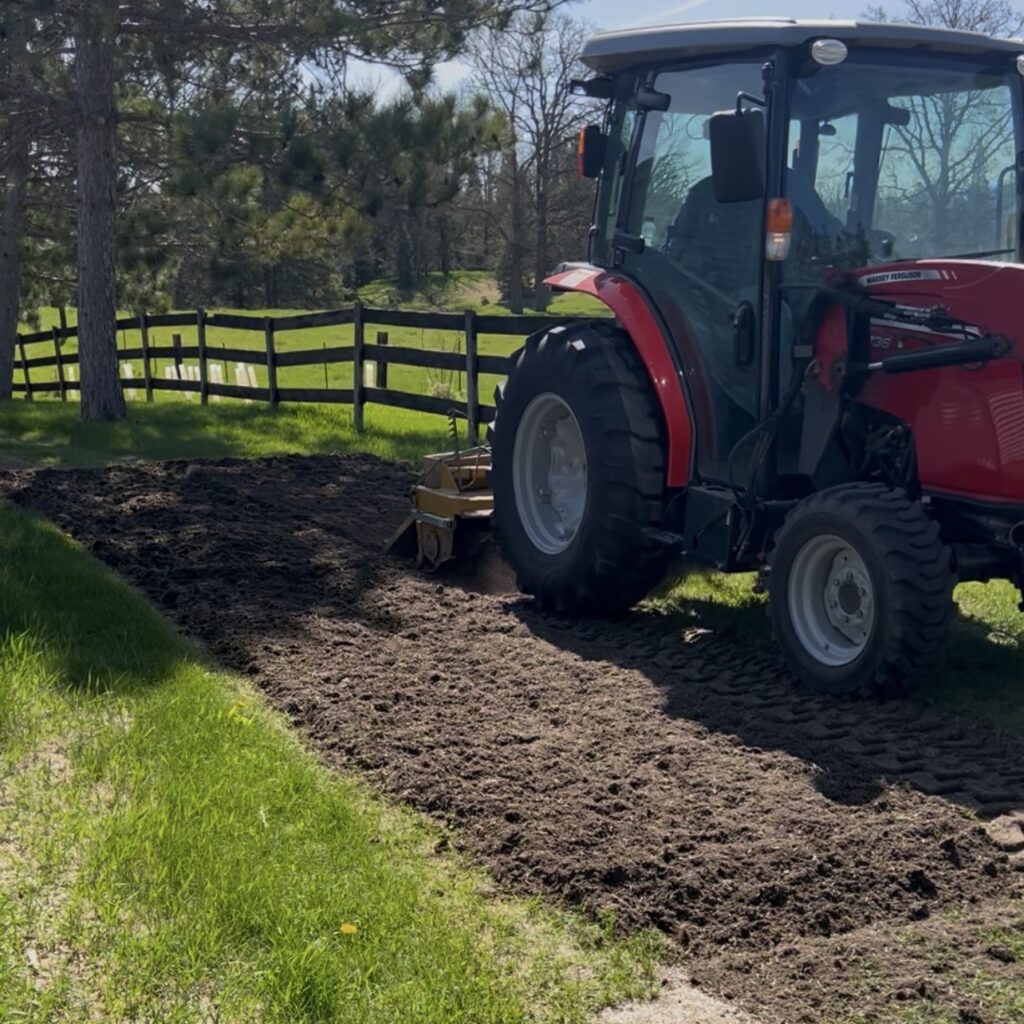
So we called the neighbor, who showed up with his tractor and made two passes with the tiller.
When he finished, we had a garden that measured roughly 10 by 20 feet.
That’ll do.
Small enough that I won’t get overwhelmed.
Big enough to experiment.
Big enough to make mistakes.
Big enough to learn what really works in a Zone 3 garden.
We’ll see what thrives, what struggles, what was worth planting, and what won’t make the cut next year. I’ll share the wins, the mistakes, and the tools that genuinely earn a permanent place in our garden shed—not because someone told me to buy them, but because they proved themselves through a northern Minnesota growing season.