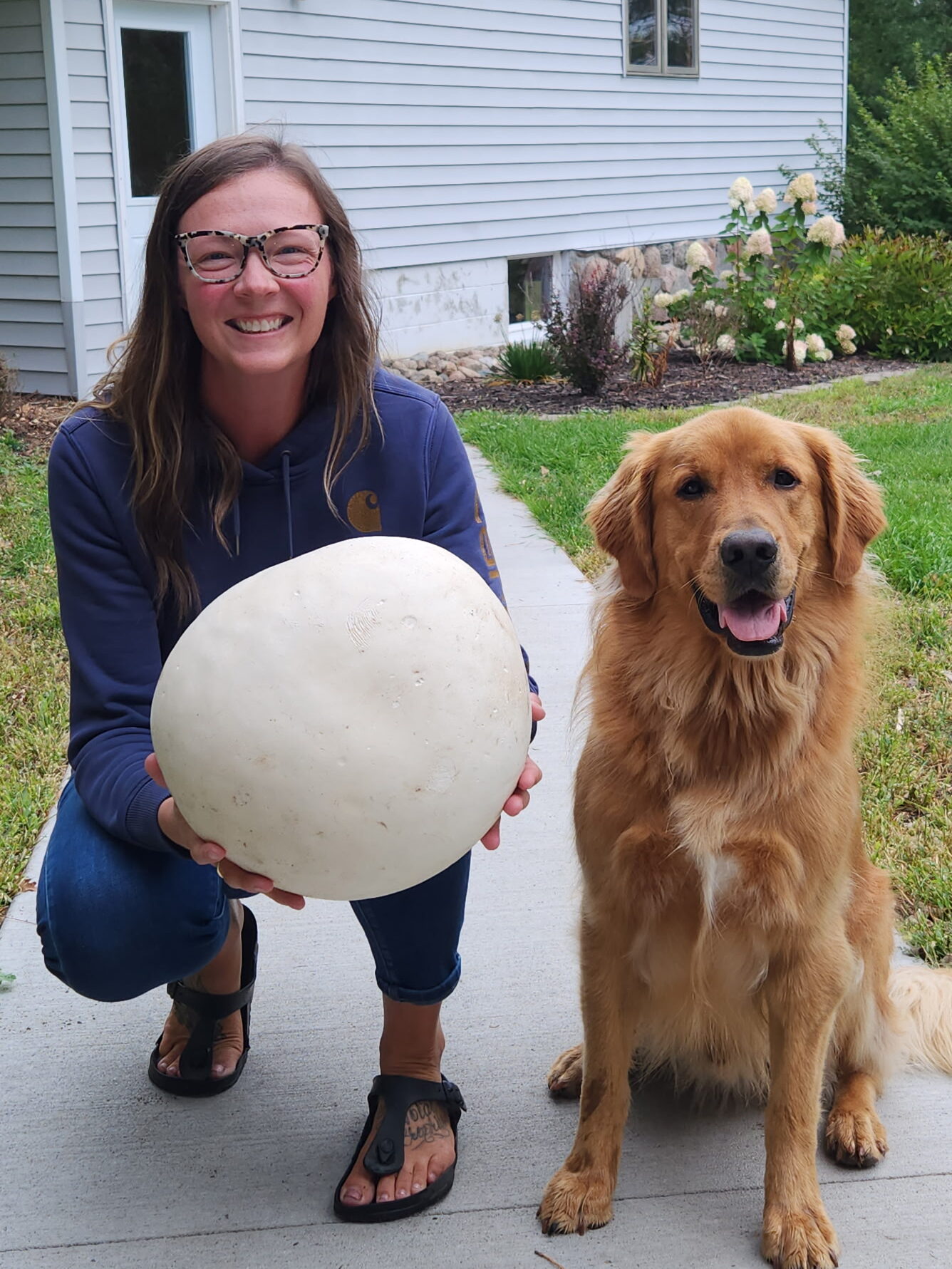
Giant puffball mushrooms might be my new favorite thing to forage.
They’re beginner-friendly to find, identify, and cook, which makes them a fun place to start if you’re new to hunting wild mushrooms. They’re also hard to miss. When you find one, you’re not exactly squinting at the forest floor trying to figure out which mushroom you’re looking at.
We don’t usually mushroom hunt in the fall here in northern Minnesota. By then, we’re busy getting ready for winter, squeezing in one more day on the boat, and trying to wrap up whatever garden projects we should have finished three weeks ago.
But after finding and preparing my first puffball, I’m hooked.
The best part? They’re huge. You don’t need many to fill your belly, and one good find can mean dinner tonight and something tucked away for winter.
Disclaimer: Wild mushroom foraging carries real risks, including the possibility of serious poisoning from misidentified mushrooms. Read the full mushroom identification and foraging disclaimer at the end of this post before consuming any wild fungi.
What do giant puffballs look like?
They’re easy to spot. You can practically forage for a giant puffball from your recliner. Look outside. See that big white blob in the field that looks like a soccer ball? It might be a puffball.
Giant puffballs can range from roughly softball size to basketball size, and sometimes even larger. They don’t have a tall stalk. Instead, they sit right on or close to the ground. They’re generally round to somewhat oblong rather than perfectly circular.
When I find one, I like to give it a gentle shove to see how it feels. If the outer texture is soft and the mushroom caves in on itself, leave it where it is. It’s past its prime and getting ready to release spores.
A fresh giant puffball should have a clean white exterior and a firm texture. Give it a little tap like a drum. It’s oddly satisfying, and that firmness is what you’re looking for.
You can also check the base in the field by carefully exposing the area where the mushroom meets the ground. If you see discoloration or the flesh is starting to soften, leave it behind. That’s a sign it’s maturing.
But that root check is only a preview. The real inspection happens when you cut the mushroom open.
Do they have a toxic lookalike?
Yes — and this is the part worth slowing down for.
The most common lookalike is the earthball, sometimes called the “false puffball.” On the outside, they can look similar. Cut one open and the interior is usually dark purple to black. Even the earthballs that stay pale inside will feel hard and dense, not the soft, marshmallow texture of a true puffball. If it’s firm or has any color at all, leave it.
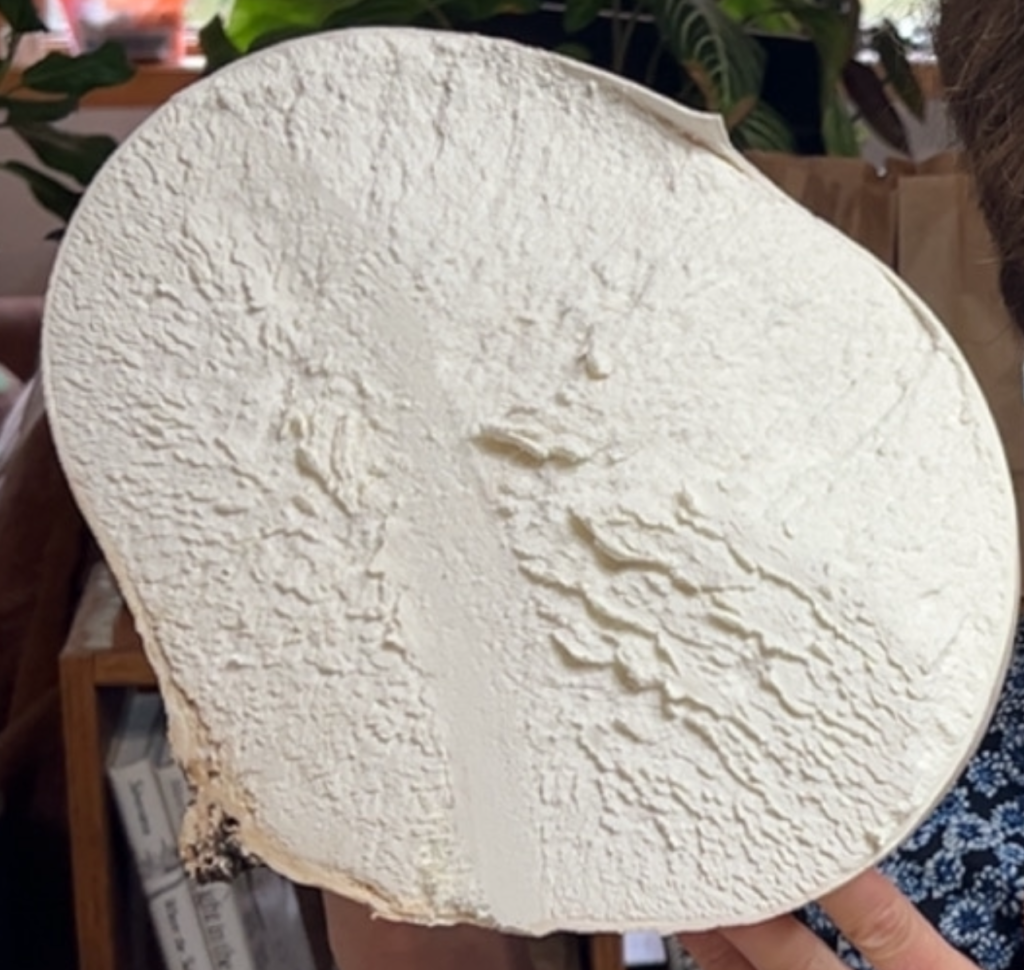
The lookalike that matters most, though, is the immature stage of certain Amanita mushrooms — the family that includes death caps and destroying angels. Young Amanitas grow inside a white “egg” that can look a lot like a small puffball from the outside. Cut one open and you’ll see the outline of a developing cap and stem already forming inside. A true puffball never has that. It’s solid, uniform, and pure white all the way through — no gills, no stem, no shape of anything trying to become a mushroom.
If you spot any gills, a stem, or a hidden shape inside once it’s cut open, it is not a puffball. Don’t eat it.
When in doubt, throw it out.
How I prepared my giant puffball mushroom
Here’s the rule, and it applies every single time, no exceptions: cut the whole mushroom in half, top to bottom, before it goes anywhere near a cutting board for prep. The interior needs to be pure white all the way through, with a soft, marshmallow-like texture, and a thick, leathery skin on the outside. That root check I mentioned earlier is a nice preview in the field — it is not a replacement for this step.
Do not eat it raw. Puffballs, like most mushrooms, need to be cooked before eating.
Prep is easy once you’ve confirmed it. Brush off any grass, leaves, and dirt. Cut it in half and slice into ½”–1″ portions. The outer skin peels off easily from there. Because that exterior skin has been protecting the mushroom the whole time, you usually don’t need to wash each slice.
Once it’s cleaned, cut, and peeled, just fry it in butter with salt and pepper. It turns golden brown and comes out soft and genuinely delicious.
The flavor is mild. I’m not usually much of a mushroom eater, but I devoured these. The texture is closer to tofu than anything else I can compare it to, and it takes on whatever flavor you cook it with.
For ours, we did an egg wash with a fish-batter dip before frying in butter. Incredible. I could’ve eaten the whole plate.
I also turned mine into an appetizer for friends — using slices as a pizza crust. I salted the cut pieces to pull out moisture, let them sit about 10 minutes, then blotted the excess water with a paper towel. From there, I fried each side in a hot pan to brown it, added sauce and toppings, and baked it at 400°F for 10–15 minutes.
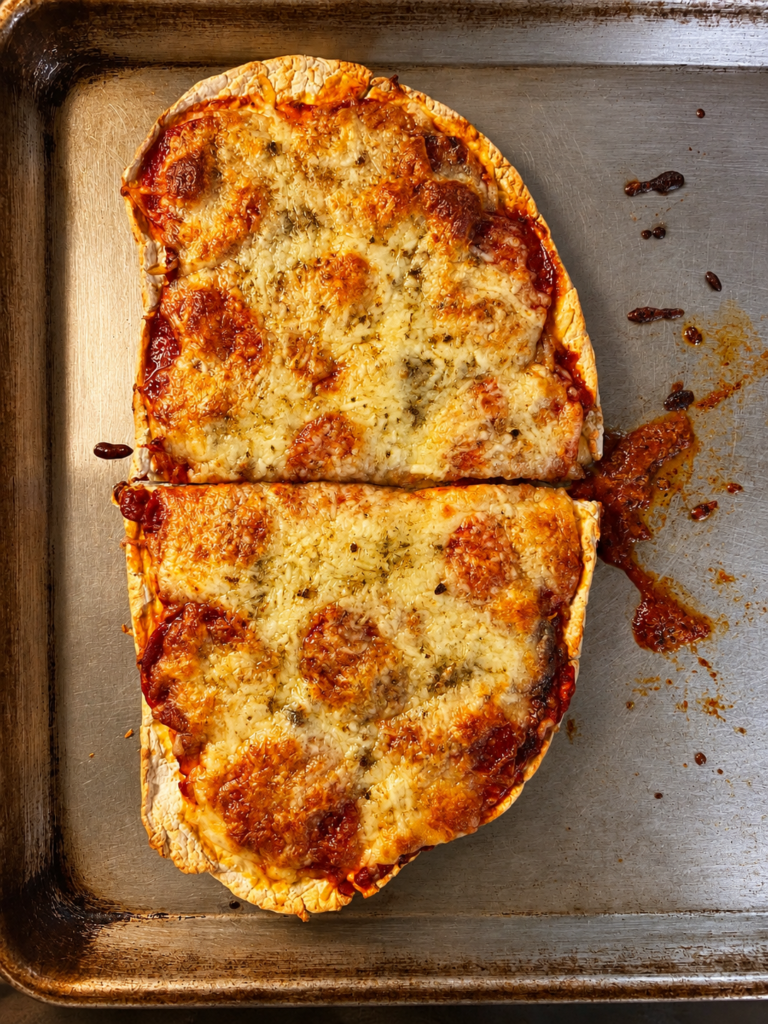
Nobody would have guessed the crust was a sliced, browned mushroom. It’s softer than a traditional crust, so if you’re after cracker-thin and crunchy, this isn’t your recipe. But if you want to watch people’s faces when you tell them what they just ate, it’s a great party trick.
Can you preserve giant puffball mushrooms?
Yes. If you’ve got a giant puffball and more mushroom than you can eat in a couple of meals, dehydrating is an easy way to put some away for later.
After confirming the mushroom is fresh and solid white inside, clean and peel it as described above. Slice it into pieces small enough to dry evenly, and arrange them in a single layer in your dehydrator.
Dry until the pieces are completely dry and brittle, with no softness or moisture left in the center. Once they’re fully dried, store them in an airtight container somewhere cool and dry.
You can grind dried puffball into a powder for seasoning, or rehydrate pieces later for cooking.
Just remember: drying doesn’t make an incorrectly identified mushroom safe. Identification comes first. Preservation comes second.
How long are they in season?
Late summer through fall is prime time for giant puffballs. Here in northern Minnesota, that usually means September into October, although the timing can vary depending on the year and where you’re looking.
The season is short, and only fresh, properly identified specimens should make their way into your kitchen. Once a puffball starts maturing and developing its spore mass, leave it where you found it.
There will be more mushrooms next year.
The whole test starts with one cut
That’s really what makes giant puffballs such an approachable mushroom to learn about, but approachable doesn’t mean automatic.
You still need to know what you’re looking at, check the entire mushroom, and be willing to leave one behind if anything doesn’t look right. A field guide, multiple identification sources, and an experienced forager are worth having in your corner, especially when you’re learning.
But once you know what you’re looking for, giant puffballs are hard to miss.
They’re big. They’re white. They don’t exactly hide.
And when you find a fresh one, there’s something pretty satisfying about carrying a giant white mushroom home knowing that one find might become dinner, pizza, and something tucked away for a cold Minnesota winter.
If you’ve been curious about foraging but haven’t known where to start, giant puffballs are a fun mushroom to learn about.
Just bring a knife.
And maybe leave the recliner.
Mushroom Identification & Foraging Disclaimer
The information on Wild and Preserved is for educational, cultural, and informational purposes only. Foraging for wild fungi and plants carries inherent risks. Many choice edible mushrooms have toxic, poisonous, or deadly lookalikes.
Never consume any wild mushroom or plant based solely on the photos, descriptions, or information found on Wild and Preserved.
By using this website, you acknowledge and agree to the following:
Verification is Mandatory: Always verify your findings using multiple reliable sources, including authoritative physical field guides. When in doubt, consult a qualified local mycologist or an experienced foraging expert.
Individual Discretion: Accurate identification requires assessing physical specimens in person. Digital images can distort colors, sizes, and critical identifying features. You are entirely responsible for your own safety and actions in the field.
Assumption of Risk: Wild and Preserved, its authors, and its owners assume no liability or responsibility for any misidentification, allergic reactions, illness, poisoning, or injury resulting from the handling, preparation, or consumption of wild mushrooms or plants discussed on this site.
The golden rule of foraging always applies: When in doubt, throw it out.