July kicks off berry-picking season, and I couldn’t be more excited.
If you’ve ever wanted to try foraging but weren’t sure where to start, wild raspberries and blackberries are two of the easiest berries to identify in northern Minnesota. They grow naturally throughout Zone 3, they’re plentiful, and chances are you’ve already eaten them countless times from the grocery store.
I forage for them every summer. It’s one of my favorite ways to catch up with friends, spend an afternoon outside, and come home with something delicious. Because these berries are so familiar, they’re also an easy introduction to foraging for kids—or anyone who’s a little nervous about getting started.
Wild Raspberries
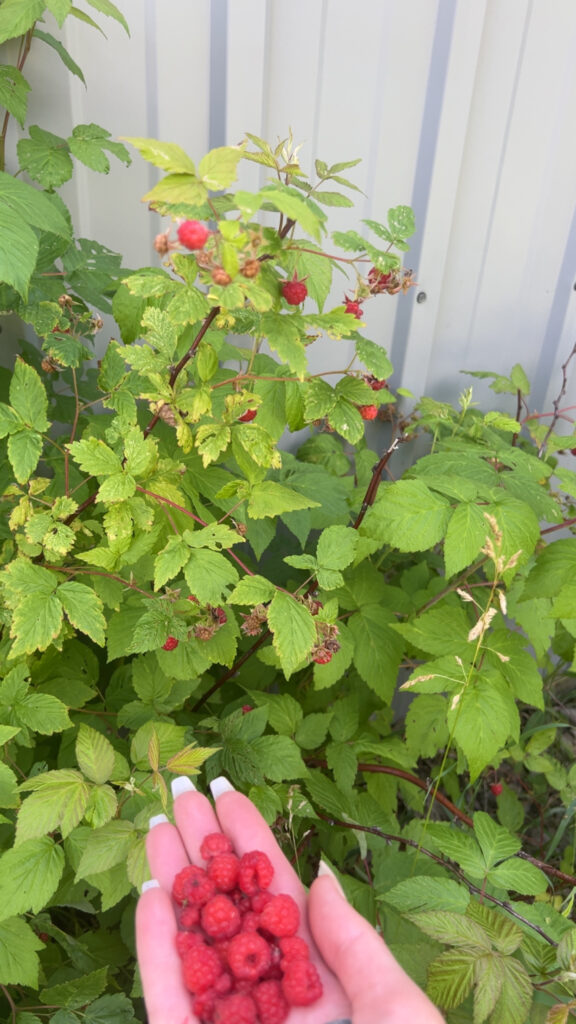
Wild raspberries grow practically everywhere once you know what you’re looking for.
They grow on shrubs with multiple woody stems, called canes, that have a purplish tint and small, fuzzy thorns. The berries look just like the raspberries you buy at the grocery store, only smaller. When you pick one, the berry slips off easily, leaving behind a white, cone-shaped core. That’s one of the easiest ways to tell you’ve found a raspberry.
One of my favorite things about raspberries is that they don’t really have any dangerous look-alikes.
They’re closely related to blackberries, thimbleberries, and dewberries—all edible members of the bramble family that grow throughout Zone 3. Thimbleberries are especially fun to find. They look like flattened raspberries and are just as edible, even if they’re a little more delicate.
Wild Blackberries
Wild blackberries often grow right alongside raspberries.
If you’re scouting patches before the fruit ripens, there are a few easy ways to tell them apart. Blackberry canes are usually a matte reddish color with larger, tougher thorns that remind me of rose bushes. Once the berries develop, the difference becomes obvious.
Unlike raspberries, blackberries stay attached to their core when picked. Instead of a hollow center, you’ll have a solid white core inside the fruit, and ripe berries turn a deep purple-black.
Once you’ve seen the difference a couple of times, you’ll never confuse the two again.
Just Go
One of the biggest misconceptions about foraging is that you need years of experience before you can safely begin.
You don’t.
If you have access to public land, a county forest, or state land, start wandering. There’s a good chance you’ll stumble across a berry patch sooner than you think.
Blackberry thorns are no joke.
I always wear closed-toe shoes, long pants, and a lightweight long-sleeved shirt when I’m picking blackberries. Trust me on this one. I tried wearing shorts and a tank top exactly once, and I spent the rest of the afternoon with scratches up and down my legs. Lesson learned.
A bug net is another piece of gear that has earned a permanent spot in my foraging bag. The moment you step into a patch, you’re going to stir up mosquitoes, flies, and gnats that hide under the shade of the berry branches. It took me a long time to realize that you can enjoy almost any day outdoors if you’re dressed for it.
The same goes for berry picking.
You don’t need years of experience. A small bucket, a little patience, and a willingness to look a little closer are enough to get started.
Before long, you’ll start noticing raspberry canes tucked along logging roads, blackberry patches soaking up the sun along an old barn, and berries you’ve probably driven past dozens of times without ever seeing.
That’s one of my favorite parts of foraging.
The landscape doesn’t change.
You do.
Once you learn to recognize a few common plants, every walk through the woods starts to feel a little different. You stop seeing “just trees” and begin noticing food, wildlife habitat, and the changing rhythm of the seasons.
So start with the easy ones.
Fill a bucket with raspberries. Pick a handful of blackberries. Bring the kids. Invite a friend. Freeze what you don’t eat on the drive home.
The goal isn’t to become an expert overnight.
It’s simply to notice a little more than you did yesterday.
And if you find yourself hooked, don’t worry—you won’t be the first.
Today, I picked wild blueberries for the very first time. I came home with stained fingertips, a full bucket, and about a hundred questions. I’ll share how we found them, how I knew they were safe to pick, and what I learned from my first blueberry harvest in the next post.